
Understanding the Role of Torsion Springs in Industrial Applications
Posted on: 28 Nov, 2025
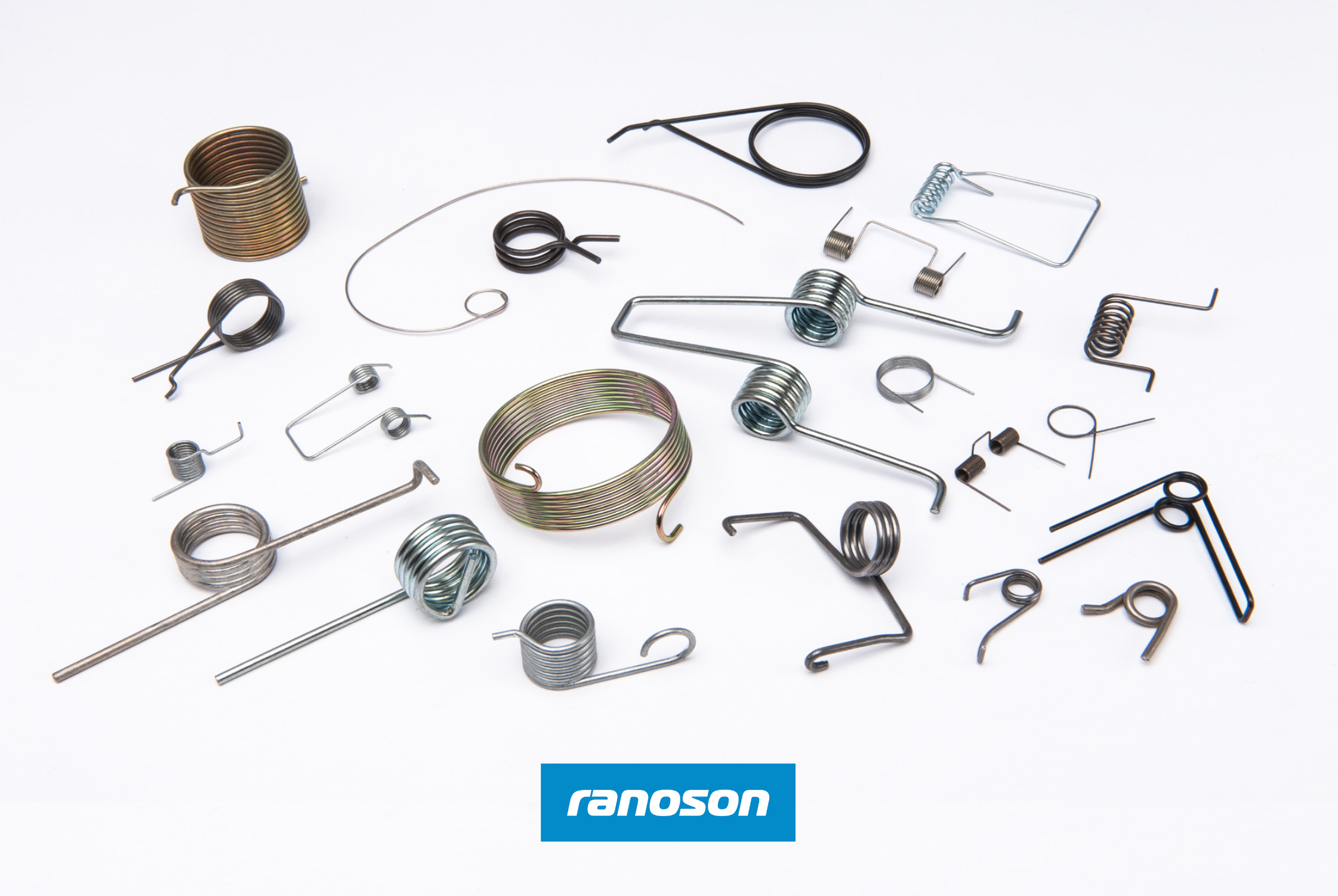
Torsion springs rarely get the spotlight, yet they quietly run some of the most important movements in industrial equipment. If a mechanism needs controlled rotation, stored torque, or a smooth return motion, there is usually a torsion spring behind it. The interesting part is how something so compact can manage so much force and still deliver predictable performance cycle after cycle.
Let’s break it down and look at how torsion springs work, why they matter, and how different industries rely on them to keep critical systems running.
What Makes a Torsion Spring Different
A torsion spring doesn’t compress or extend like a standard coil. Instead, it works through twisting. The legs of the spring rotate around the coil body, which stores mechanical energy as torque. When the load is released, the spring unwinds and returns to its original position.
What this really means is that a torsion spring controls rotational movement. It resists force in one direction and returns the component to a defined starting point. When the design is right, the motion feels smooth, controlled, and consistent even under heavy or repetitive loads.
Where Torsion Springs Are Used in Industry
Almost every industrial sector uses torsion springs in one form or another. Their value sits in precision and repeatability, which is why you find them in:
- Automotive systems where hinges, throttle mechanisms, flaps, and internal assemblies rely on rotational control.
- Electrical and electronics where switches, actuators, and connectors need controlled motion and return force.
- Consumer appliances where doors, lids, triggers, and levers must operate smoothly over thousands of cycles.
- Industrial machinery where safety interlocks, latching mechanisms, and precision moving parts depend on accurate torque.
- Heavy equipment where springs must handle frequent loading, shock, and environmental exposure without losing shape.
The common thread is simple. Any mechanism that rotates in a controlled way and must snap back into place with repeatable precision needs a torsion spring.
How Torque Shapes Performance
The most important factor in torsion spring design is torque. This defines how much rotational force the spring can produce. Even a small mismatch can cause the mechanism to feel too light, too stiff, or inconsistent over time.
Torque is influenced by coil diameter, wire diameter, coil direction, leg length, and the number of active coils. A change in any one of these alters how the spring behaves under load. That is why industrial applications demand clear load targets and reliable testing to validate torque across the entire working range.
Why Material Choice Matters
Material directly influences strength, fatigue life, corrosion resistance, and temperature stability. Industrial torsion springs are often made from high tensile carbon steel, stainless steel, or specialty alloys when higher temperatures or corrosive environments are involved.
Selecting the wrong material is one of the fastest ways to shorten a product’s lifespan. Choosing the right one keeps performance stable even when the application runs long hours under demanding conditions.
How Industrial Loads Affect Torsion Springs
Torsion springs in industrial environments face repetitive cycling, shock loads, vibration, and exposure to heat. If the spring is not sized or heat treated properly, it can deform or lose torque over time.
Here’s the thing. A torsion spring doesn’t usually fail suddenly. It starts with a small drift in torque. Then the return motion feels slightly delayed. Eventually, the movement becomes inconsistent. This is why testing matters and why industrial-grade springs are always designed with tight tolerances and verified across thousands of cycles.
Applications That Push Torsion Springs to the Limit
Some industries demand more from torsion springs than others. A few examples include:
- Automotive interiors where mechanisms must operate smoothly even with temperature swings.
- High cycle machinery where springs may operate hundreds of times per hour.
- Safety devices where accuracy and repeatability are non negotiable.
- Precision instruments where even a slight torque deviation affects performance.
These applications reveal how important design predictability and fatigue resistance are for torsion springs.
What OEMs Should Look For in a Torsion Spring Supplier
The supplier you choose directly affects the performance of your product. Torsion springs are not one size fits all, so the conversation between engineering teams must be detailed and aligned with the actual duty cycle.
OEMs and sourcing managers should look for a partner who can deliver:
-
Accurate torque curves backed by real testing.
-
Material traceability and consistency.
-
Precision forming with CNC and multi axis capability.
-
Heat treatment processes suited to the spring’s duty.
-
Inspection at every stage to catch drift early.
A reliable partner ensures that every spring performs to spec, not just the first few samples.
The Ranoson Approach
At Ranoson, torsion spring production is built on precision. We run CNC and multi axis coiling equipment that delivers consistent geometry, stable torque values, and smooth surface finish. Every batch is inspected for leg angle accuracy, coil uniformity, and torque behaviour across the working range.
Ranoson’s focus is simple. Give OEMs and Tier 1 suppliers springs they can trust, cycle after cycle, without drift or surprises. When a mechanism needs dependable rotational control, the spring behind it must be engineered with care, manufactured with precision, and inspected with discipline.
For Procurement Teams
When you look at a torsion spring, you might see a simple metal component. In reality, it is a precision element that directly influences how a mechanism moves, locks, releases, and returns. A well designed torsion spring makes the entire system feel confident and consistent. A poorly designed one introduces noise, wear, and unpredictability.
If you want clarity on torsion spring options or need support with an active project, we are ready to help you move from requirement to reliable performance.
📧 sales@ranoson.co.in
📞 +91 7895010088 | +91 7217013190