
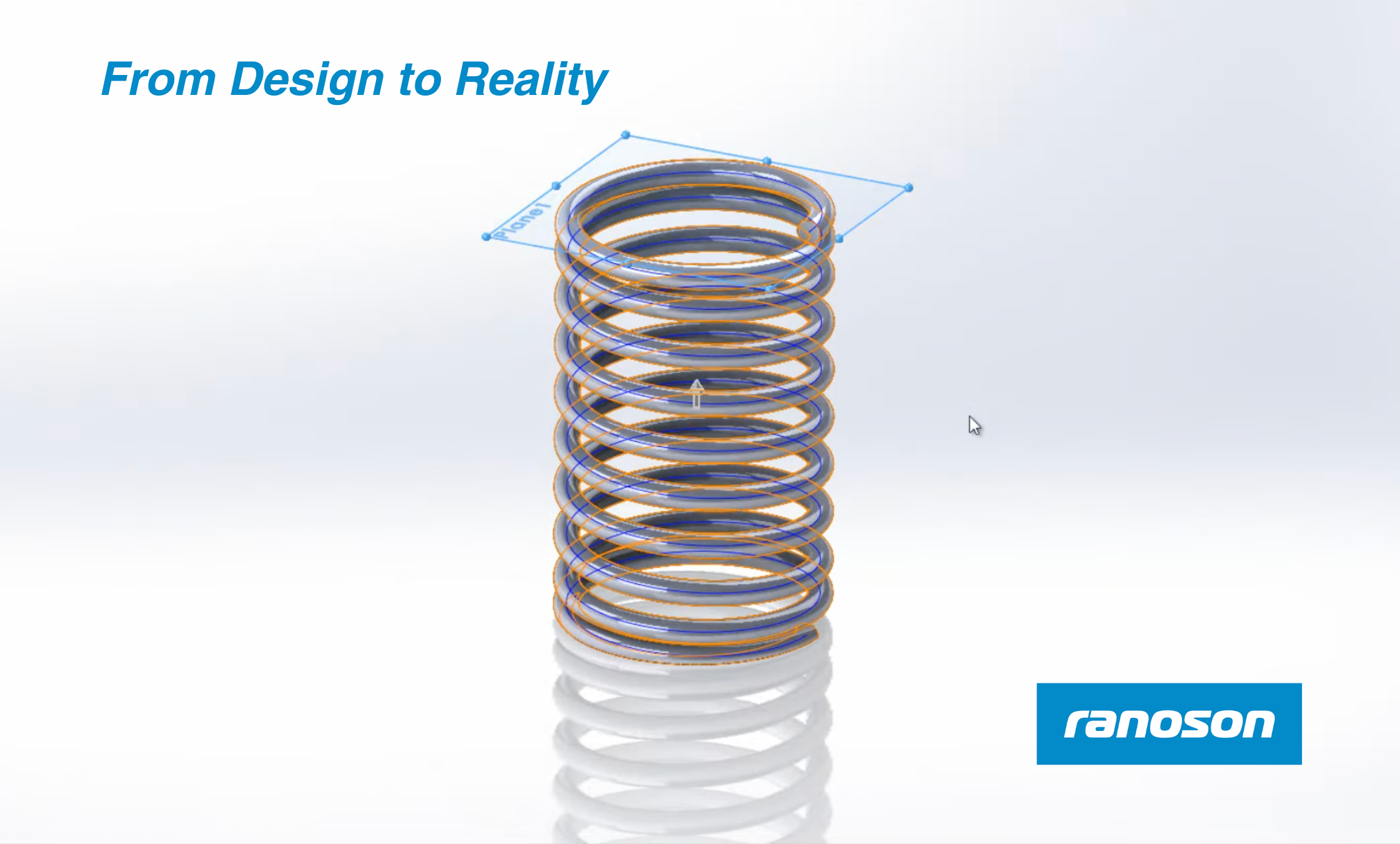
The Role of Prototyping in Spring Design
Posted on: 05 Nov, 2025
Great spring design starts long before the first production batch. It starts with smart prototyping and honest testing. A prototype turns assumptions into measurements and converts ideas into data you can trust. For OEMs and Tier 1 suppliers, that is the difference between a part that fits on paper and a part that performs in the field.
Why Prototyping Matters
Prototyping lets teams prove function, refine geometry, and validate manufacturability without committing to full scale. It reduces risk, shortens the path to a stable design, and saves costly rework later. Here is the simple logic. Build it. Test it. Learn quickly. Lock the final design with confidence.
Questions a Good Spring Prototype Should Answer
- Does the load deflection curve match the design target across the working range?
- Is the spring index appropriate for stability, buckling resistance, and life?
- Do stresses stay within limits at maximum deflection or torque?
- Is the form factor compatible with the assembly and any mating parts?
- How does the part behave after environmental exposure and cycling?
The core variables to explore during spring prototyping
- Wire diameter: balances force, stiffness, and fatigue life
- Coil count and pitch: tunes rate and free length within the available envelope
- Material grade: carbon steel, stainless, music wire, or specialty alloys based on temperature, corrosion, and electrical needs
- Ends and hooks: grind, loop, or custom forms that affect load transfer and assembly
- Surface and treatment: shot peen, passivate, plate, or coat for fatigue and corrosion resistance
- Post forming process: stress relief where the application demands stability and life
Design Testing that Turns a Sample into Evidence
Prototyping without testing is guesswork. Here are the tests that matter most for springs and wire forms.
- Load deflection mapping: measures force at defined deflections or angles and confirms rate consistency
- Set and relaxation: checks permanent deformation after loading so you know how force drifts over time
- Fatigue and cycle life: validates performance at target stroke or torque over thousands or millions of cycles
- Dimensional stability: verifies free length, coil diameter, hook geometry, and ground end squareness
- Environmental exposure: heat soak, humidity, salt spray, or chemical contact to mirror real conditions
- Assembly fit and function: tests how the spring behaves inside the actual mechanism, not just in a fixture
Simulation and Physical Prototypes Work Best Together
Finite element checks and rate calculators help narrow choices fast. They guide early picks for wire size, coil index, and stress targets. Then the physical prototype confirms the model. That hybrid approach saves loops and keeps development focused on what the application really needs.
How Prototyping Saves Cost and Time
- Removes redesign after tool build by finding issues early
- Cuts rejection and rework in pilot runs
- Prevents field failures by validating fatigue and environment before release
- Protects timelines with clear pass fail gates that everyone understands
Common Pitfalls and How to Avoid Them
- Designing to nominal only: ignore tolerances and the part will drift in production
- Skipping stress relief where duty is high: expect drift in force and early fatigue
- Testing only at room conditions: heat, cold, and humidity change behavior
- Copying an old part: different loads or envelopes need fresh maths and fresh tests
- Under sampling: one good sample does not define a stable process
A Simple Prototyping Workflow that Works
- Define targets: force at key points, stroke or angle, life, space, and environment
- Pick the first envelope: material, wire, coil index, turns, ends or hooks
- Model and predict: rate, stress, and buckling checks to narrow candidates
- Build fast samples: CNC coiling or multi axis forming with measured setup data
- Test hard: force curve, set, cycle life, and environment as per the use case
- Iterate with data: adjust one variable at a time and retest
- Freeze and document: drawing, tolerances, treatment, inspection plan
- Pilot run: confirm capability and gauge stability before scale
Where Wire Forms Fit into R&D
Wire forms often act as linkages, retainers, or motion limiters. Prototyping here focuses on bend sequence, springback control, slot or pin engagement, and clearance through the motion path. Multi slide forming and CNC bending allow quick trials with precise angles. Inspection then confirms that each bend lands within tolerance under real assembly loads.
What this Means for OEMs and Sourcing Teams
Strong prototypes reduce debate and speed sign off. They give engineering, quality, and procurement a shared view of risk and readiness. With a verified force curve and a stable process, you can release to production knowing the part will behave the same on line as it did in test.
How Ranoson Runs Spring and Wire form Prototyping
At Ranoson, we treat every prototype like production in miniature. That means controlled coiling or forming, documented setups, and real inspection data. Our process starts with your design and specifications. From there, we manufacture samples on CNC and multi-axis forming equipment to achieve precise geometry and repeatability.
Even at the sample stage, we apply processes like stress relieving and surface finishing wherever required, so that your testing data truly reflects production behavior.
Testing is built into the process. Load-deflection curves are recorded across the working range. Set and relaxation are measured at defined loads. Fatigue rigs cycle samples to the desired life target. When needed, environmental exposure tests simulate operating conditions.
If results show variation, we adjust one parameter at a time and rerun until the performance stabilises. The outcome is a validated prototype. Ready for production, backed by data, and free from guesswork.
Ranoson’s strength lies in precision manufacturing and controlled testing.
When to Move from Prototype to Production
- Force at each control point is inside tolerance across a representative sample set
- Set after load is within the defined limit and stable through retest
- Cycle life meets target with margin at the full stroke or torque
- Environmental exposure does not push the part out of spec
- Process notes, gauges, and inspection checks are ready for the line
Practical Checklist to Start your Next Prototype
- Share the true working envelope and any clash risks
- Define must hit points on the force curve and acceptable drift over life
- State the real environment, not just room tests
- Align on materials that are actually available at scale
- Agree on pass-fail gates and sample sizes before the build
Prototyping is not a box to tick. It is the fastest way to reach a spring or wire form that performs exactly as the application demands. Build with intent. Test with discipline. Decide with data. Do that, and production becomes simpler, quality becomes predictable, and timelines hold.
From prototype to production, we help you verify performance, fine-tune specifications, and scale with confidence. If you want a prototype that turns into a stable production part, we are ready to help you design, test, and validate with clarity.
📧 sales@ranoson.co.in
📞 +91 7895010088 | +91 7217013190